

 Facebook
 X
X
 Pinterest
 Copy Link
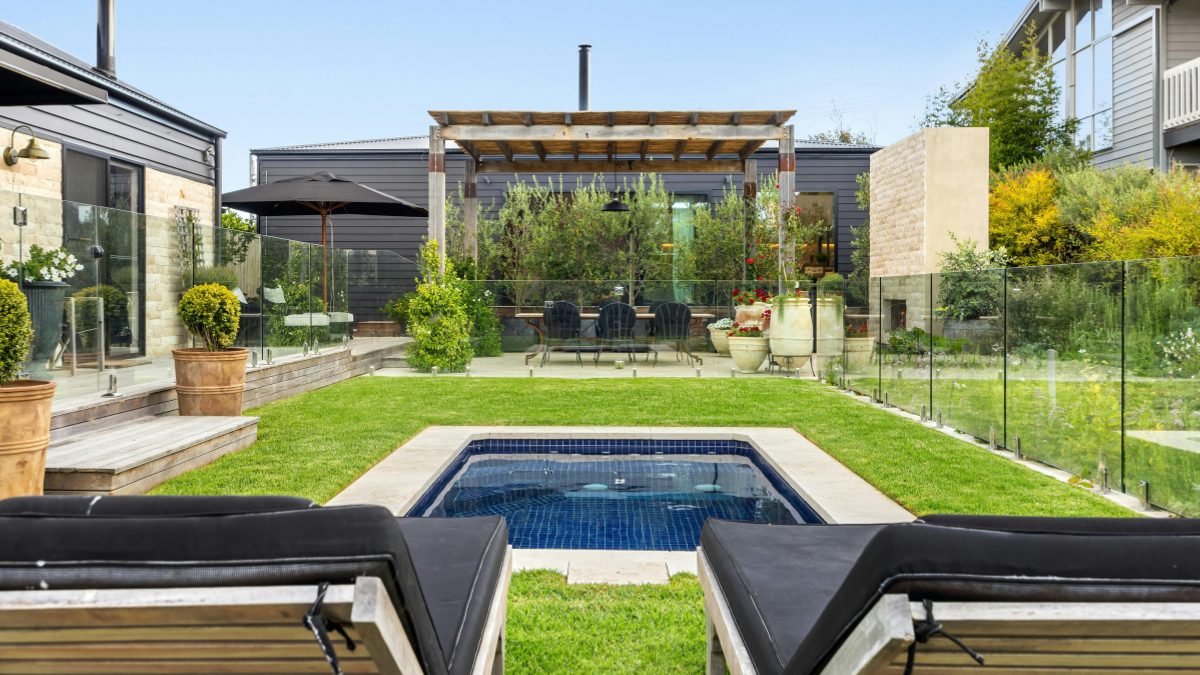
A $10,000 patio can make financial sense. A $50,000 backyard renovation may not. So where is the line?
Outdoor living continues to be important to buyers, but there is a mistake I see homeowners make when thinking about resale:
They assume that if buyers like an outdoor feature, adding that feature automatically increases the home’s value by what it costs.
It doesn’t quite work that way.
A deck can be desirable. So can an outdoor kitchen, pergola, fireplace, professional landscaping, lighting, and a beautiful stone patio.
Put all six into one backyard, though, and you haven’t necessarily created six times the value.
You may have simply created a very expensive backyard.
If you’re renovating because you plan to enjoy the home for another ten years, that’s one conversation. If you’re renovating because you’re thinking about selling within the next few years, I would look at the project very differently.
Here’s something to consider before you start.
Buyers Pay for the Experience, Not Your Renovation Invoice
When buyers step into a backyard, they aren’t mentally adding up what the seller spent.
They’re deciding whether the space feels useful.
Can I have dinner out here?
Where would we put the grill?
Is there enough privacy?
Where would people sit when we entertain?
Is this going to be a lot of work?
That last question matters more than homeowners sometimes realize.
A sophisticated outdoor space can create a fantastic first impression, but every additional feature can also introduce maintenance, winterization, repairs, utilities, and replacement costs.
That’s why I think the best outdoor renovations accomplish something very specific:
They make the property feel easier to live in.
And that brings us to the numbers.
Two Patios Tell a Very Different Story
One of the most interesting comparisons in the available remodeling data involves two very different versions of a “patio project.”
In the National Association of REALTORS® outdoor remodeling research, a relatively straightforward 18-by-16-foot paver patio had an estimated project cost of $10,500 and estimated cost recovery of $10,000.
That’s roughly 95%.
Now compare that with Zonda’s much more elaborate backyard patio benchmark.
That project included a 20-by-20-foot flagstone patio, a large glass door connecting the house to the backyard, a gas fire pit, modular outdoor kitchen, pergola, lighting, and new gas and electrical infrastructure.
Estimated cost?
$51,454.
Estimated resale value added?
$23,672.
That’s approximately 46% cost recovery.
Same general category—outdoor living.
Completely different financial outcome.
And I think there’s an important lesson in that.
The patio wasn’t necessarily the problem. The scope was.
Once a project becomes large enough, you’re no longer simply correcting a deficiency in the property.
You’re customizing it.
That’s where resale becomes much less predictable.
The First Dollar Usually Works Harder Than the Last
Imagine a backyard with nothing but grass outside the rear door.
Adding a properly sized patio or deck solves a very obvious problem: there is nowhere comfortable to put a table, grill, or outdoor furniture.
That first improvement changes how the home functions.
Now add landscaping around it.
The space feels finished and private.
Add lighting.
Now it works after sunset.
Add some shade.
Now it’s more comfortable during hot summer afternoons.
Those improvements are solving problems.
But eventually you reach a point where the project moves from functional improvement to personal amenity.
Maybe it’s the full outdoor kitchen.
Then the built-in fireplace.
Then the television wall.
Then the plunge pool.
Then the sauna.
They’re not necessarily bad investments if you’re going to use them.
But from a resale perspective, you’re moving farther away from what nearly every buyer appreciates and closer to what a specific buyer appreciates.
That’s an important distinction.
Think About Outdoor Improvements in Three Layers
When I’m looking at improvements through a real estate lens, I find it helpful to separate them into three categories.
Layer 1: Fix what buyers would consider a problem.
This is where I would spend first.
Think about:
- Poor drainage
- Cracked or failing hardscape
- An unsafe or deteriorated deck
- Overgrown landscaping
- Dead lawn areas
- Poor exterior lighting
- Lack of privacy
- No practical connection between the house and yard
These aren’t glamorous projects.
But correcting them removes objections.
And removing an objection can sometimes be more valuable than adding another amenity.
Layer 2: Make the backyard obviously usable.
Once the basics are handled, I would look at function.
This could mean adding a right-sized deck or patio, defining a dining area, adding a grilling station, creating shade, improving lighting, or using landscaping to establish a more private lounge area.
Notice that none of this requires turning the backyard into a resort.
The goal is for someone to open the back door and immediately understand how they could use the space.
That’s powerful when selling because buyers don’t have to use much imagination.
Layer 3: Add amenities for your lifestyle.
This is where outdoor kitchens, elaborate fireplaces, plunge pools, saunas, outdoor showers, premium AV systems, and similar features generally fall.
Some of these features can absolutely help a home stand out.
Outdoor kitchens, for example, have encouraging market data behind them.
But I would still ask:
Does this feature make sense for this particular home?
A beautiful outdoor kitchen on a higher-end property with a large entertaining area can feel completely appropriate.
The exact same kitchen squeezed into the backyard of a smaller home may feel like the renovation budget was allocated to the wrong place.
Context matters.
Your Neighborhood Creates an Invisible Renovation Ceiling
This is the part of renovation planning homeowners don’t always think about.
You aren’t renovating in a vacuum.
Your home is still going to be compared with other homes in its market.
If similar homes around you typically have simple decks and patios, installing a $75,000 outdoor entertaining complex doesn’t automatically move the property into an entirely different pricing category.
Buyers are still comparing:
square footage,
condition,
kitchen and bathroom updates,
lot,
location,
bedroom count,
garage and basement space,
school district,
and the overall quality of the home.
The backyard is one piece of that equation.
This is why I would be particularly careful about using national ROI statistics to justify a project.
A national percentage can’t tell you whether an outdoor kitchen makes financial sense for your street, your price point, and your likely buyer.
Local comparable sales are much more useful for that conversation.
Mercer County and Bucks County Add Another Layer: Seasonality
Our climate matters too.
We’re not designing outdoor spaces in Southern California where a backyard kitchen might comfortably be used throughout most of the year.
In New Jersey and Pennsylvania, we have heat, humidity, rain, freezing temperatures, snow, and relatively short stretches of perfect outdoor weather.
That makes season extension particularly valuable.
Personally, I would give serious consideration to shade and coverage before automatically making a patio larger.
A pergola, covered seating area, screened space, or strategically placed shade can make an existing outdoor area substantially more functional.
The same applies to lighting.
In September and October, when it gets dark earlier but the weather may still be beautiful, lighting can extend how long you actually use the backyard.
That’s a functional upgrade—not simply a decorative one.
Don’t Forget the Cost Buyers See After Closing
Here’s another layer I think homeowners should consider:
Buyers don’t just see features. They see future responsibilities.
A pool requires maintenance.
Wood requires maintenance.
An outdoor kitchen has appliances.
Irrigation systems need winterization.
Gas fire features have components.
Large landscapes need care.
Composite decking may reduce some maintenance, but the upfront cost is higher.
Even naturalistic landscaping isn’t truly “no maintenance.”
This doesn’t mean you shouldn’t install these things.
It means the best outdoor spaces strike a balance between impressive and manageable.
A backyard that looks incredible but also looks like it requires a landscaping crew every week can actually narrow its audience.
One of the Best Investments May Be What You Don’t Build
This is where my design side and real estate side completely agree.
Empty space isn’t wasted space.
Not every corner of a backyard needs a feature.
Sometimes a smaller patio surrounded by beautiful planting feels more luxurious than hardscaping the majority of the yard.
Sometimes a simple grilling station makes more sense than a full kitchen.
Sometimes movable furniture is better than permanent built-ins because the next owner can arrange the space differently.
And sometimes the right decision is to improve the landscaping, clean the existing patio, add lighting, stage it beautifully, and stop.
Restraint can be a design decision.
It can also be a financial one.
So, How Much Should You Actually Spend?
I wouldn’t start with a dollar amount.
I would start with four questions:
- How long are you planning to stay?
If you’re staying for ten years, your personal enjoyment should carry considerably more weight.
If you’re planning to sell next year, I’d be much more conservative.
- What is currently missing?
Solve actual problems before adding amenities.
- What is normal for your price point?
Look at comparable homes—not inspiration photos.
- Will the next improvement broaden buyer appeal or narrow it?
A usable deck has broad appeal.
Professional landscaping has broad appeal.
Good lighting has broad appeal.
A highly customized $20,000 specialty feature may not.
That’s not necessarily a reason to skip it. It just means you should understand why you’re spending the money.
My Two Cents
I love a beautiful outdoor space. With my design, I can absolutely appreciate the materials, layout, craftsmanship, and details that go into creating one.
But if resale is part of the conversation, I would rather see a homeowner create a well-designed $20,000 backyard that makes sense for the property than spend $60,000 trying to check every outdoor-living box.
Fix the problems first.
Create function second.
Add design and comfort third.
Then decide whether the specialty features are worth it to you.
Because the goal isn’t to have the backyard with the most features.
It’s to have a backyard that feels like it belongs with the home—and makes the entire property more enjoyable and easier to sell.
If you’re considering a larger renovation in Mercer County, NJ or Bucks County, PA and resale is somewhere on your radar, I’m happy to help you look at the project from both sides before you start spending. Sometimes knowing what not to renovate is just as valuable as knowing what to improve.




