

 Facebook
 X
X
 Pinterest
 Copy Link
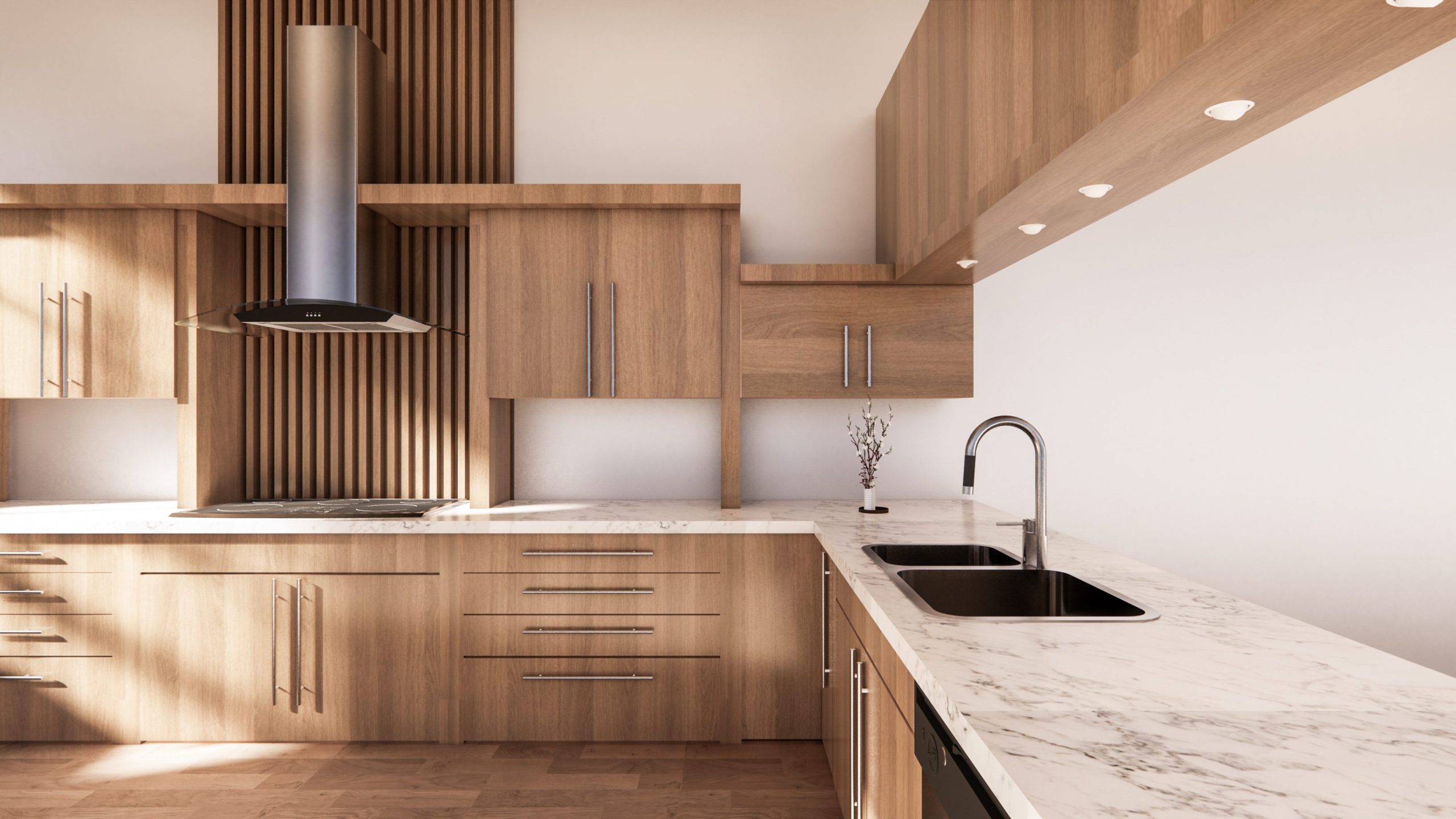
For years, the all-white kitchen was considered the safest choice.
White cabinets, white countertops, white backsplash—it was bright, clean, and easy to market. But lately, kitchens are starting to look a little different.
Homeowners and designers are moving away from stark, all-white spaces and toward something warmer, more layered, and more natural.
Warm wood cabinetry is becoming the new favorite.
That does not mean white kitchens are suddenly out. The real shift is away from kitchens that feel overly cold or one-dimensional. Instead, buyers are responding to spaces with natural wood grain, softer whites, warmer finishes, and more visual depth.
And from both a design and resale perspective, that makes a lot of sense.
White Cabinets Are No Longer the Automatic First Choice
The change is not just showing up on Pinterest or in design magazines.
According to Houzz kitchen trend research, white cabinets declined from 43% of kitchen renovations in 2019 to 28% in 2026. During that same period, wood cabinetry gained popularity and reached 29%, narrowly overtaking white for the first time in the latest study.
That is a meaningful shift.
White cabinetry dominated kitchen design for years, so seeing wood move ahead—even slightly—shows how much homeowner preferences are changing.
But here is something to consider: this is not necessarily a return to the dark cherry cabinets or orange-toned oak kitchens many people remember from years ago.
The current look is much softer and more refined.
Think:
- Light or medium white oak
- Natural walnut
- Rift-sawn or quarter-sawn wood grain
- Warm beige and mushroom tones
- Matte or low-sheen finishes
- Creamy whites instead of bright, cool whites
The result feels modern, but not overly trendy.
Why Warm Wood Kitchens Feel So Appealing
The kitchen is one of the hardest-working spaces in the home.
It is where people cook, gather, entertain, answer emails, help with homework, and start and end their day. Because of that, buyers are increasingly drawn to kitchens that feel comfortable—not just perfect in a photo.
Warm wood brings something an all-white kitchen sometimes lacks: texture and depth.
Natural grain breaks up flat surfaces and gives the room a more finished, intentional feel. It also pairs easily with many materials buyers already love, including quartzite, marble, plaster-style walls, brushed metals, and handmade tile.
From a design perspective, wood also helps a kitchen feel connected to the rest of the home.
This can be especially valuable in Mercer County and Bucks County, where many homes have traditional architecture, hardwood flooring, fireplaces, millwork, or mature outdoor surroundings. A warm kitchen often complements those features more naturally than an ultra-modern, bright-white space.
The Real Trend Is Not “Wood Instead of White”
This is where the trend becomes more nuanced.
The most updated kitchens are not always fully wood.
Many homeowners are using wood selectively to create contrast.
For example:
- Wood lower cabinets with warm white upper cabinets
- A wood island with painted perimeter cabinetry
- A full-height wood pantry wall
- Wood accents around the range hood
- Natural wood open shelving
- Cream cabinetry paired with a walnut or white oak island
This approach gives homeowners the brightness they liked about white kitchens while adding the warmth they felt was missing.
In other words, the trend is not simply replacing one cabinet color with another.
It is about creating a layered kitchen.
That means combining materials, tones, and textures so the room feels collected rather than overly matched.
What Most People Do Not Think About
Cabinet color gets most of the attention, but cabinet function matters just as much.
Houzz’s latest kitchen research found that specialty storage is now included in the overwhelming majority of upgraded kitchens. Features such as waste pullouts, tray dividers, spice storage, deep drawers, and organized cutlery systems are becoming expected rather than optional.
That is important for buyers and sellers.
A beautiful cabinet finish may create the first impression, but storage and layout are what make the kitchen work every day.
When I walk through a home, I am not only looking at whether the cabinets are attractive. I am also looking at:
- How easily the drawers open
- Whether the storage is practical
- If the layout supports cooking and entertaining
- Whether the materials appear durable
- How difficult the finish will be to maintain
- Whether the kitchen photographs well
That is where my design and construction background comes into play. A kitchen should not just look good—it should function well and make sense for the home.
Should You Replace Your White Cabinets?
Not necessarily.
This is one of the biggest takeaways from the research.
If your white cabinets are in good condition, the answer is usually not to remove them simply because wood is trending.
The better question is:
Does the kitchen feel cold because of the cabinets—or because everything else is white too?
Sometimes the cabinetry is not the problem.
A white kitchen can still feel fresh and marketable when it includes warmer elements such as:
- Natural wood stools or dining chairs
- A wood-toned island
- A softer wall color
- Warm under-cabinet lighting
- A textured backsplash
- Brass, bronze, pewter, or nickel hardware
- Woven window treatments
- Wood cutting boards and restrained styling
- A natural-fiber runner
These changes can soften the room without requiring a full renovation.
My Design Tip
Before replacing perfectly good cabinets, remove some of the visual coldness first.
Change the lighting temperature, introduce one or two wood tones, update the hardware, and simplify the countertop styling.
Then look at the kitchen again.
You may find that the space did not need new cabinets—it simply needed more contrast and warmth.
What This Means for Sellers
Kitchens matter to buyers, but that does not mean every seller should complete a major renovation before listing.
Zillow research cited in the report found that 57% of buyers consider having their preferred kitchen style extremely or very important. At the same time, national remodeling data suggests that kitchen renovation projects typically recover only around 60% of their cost at resale.
That is why I recommend being strategic.
If the kitchen is severely damaged, poorly laid out, or visibly outdated, a larger project may be worth discussing.
But if the layout works and the cabinet boxes are in good condition, a selective refresh may provide a much better return.
That could include:
- Refacing or refinishing cabinet doors
- Replacing dated hardware
- Updating the backsplash
- Installing better lighting
- Painting the walls a warmer neutral
- Replacing one overly dated countertop
- Styling the kitchen before photography
The goal is not always to create a brand-new kitchen.
The goal is to help buyers see a clean, functional, inviting space they can picture themselves using.
What Photographs Well Matters
A kitchen can be beautiful in person and still fall flat online.
Since most buyers first see a home through listing photos, the kitchen needs to be prepared for the camera—not just for daily life.
Before photography, I typically recommend:
- Clearing most items from the countertops
- Removing magnets and papers from the refrigerator
- Hiding dish soap and cleaning products
- Turning on pendant and under-cabinet lighting
- Adding one simple focal point, such as a vase or bowl
- Making sure stools are evenly spaced
- Removing small rugs that visually break up the flooring
- Photographing an angle that shows the relationship between the kitchen, island, and adjoining room
Warmth should come from the materials and lighting—not from clutter.
The Safest Wood Tones for Long-Term Appeal
Not every wood finish will age equally well.
For homeowners thinking about resale, I would lean toward light to medium natural tones rather than anything overly orange, red, gray, or heavily distressed.
Some of the most adaptable options include:
- White oak
- Natural oak
- Light walnut
- Medium walnut
- Stained ash
- Neutral wood veneer
These finishes pair well with both warm and cool accents, which gives future homeowners more flexibility.
They also work with many popular countertop materials, including white quartz, quartzite, soapstone, and lightly veined marble.
A Few Combinations That Feel Current Without Feeling Trendy
Light Wood and Warm White
Pair white oak cabinetry with creamy white walls, soft white counters, and brushed brass or nickel hardware.
This keeps the kitchen bright while avoiding the sterile feel of an all-white palette.
Wood Lowers and White Uppers
This is one of the safest options for homeowners who still love white cabinetry.
The white uppers help the room feel open, while the wood lowers add depth and make everyday wear less noticeable.
Wood Cabinets and Soft Green
A muted green island or pantry cabinet can pair beautifully with white oak.
The look feels natural and calm without becoming too bold.
Medium Wood and Cream
Medium oak or walnut with cream walls and a simple slab backsplash creates a richer, slightly more elevated look.
This combination works especially well in traditional and transitional homes.
The Bottom Line
White kitchens are not disappearing.
They are simply becoming warmer.
The kitchens buyers are responding to now tend to include natural grain, softer whites, matte finishes, thoughtful storage, and a mix of materials rather than one color repeated across every surface.
That shift is good news for homeowners.
You do not always need a full renovation to make your kitchen feel more current. Sometimes a few well-chosen updates can create most of the visual impact for a fraction of the cost.
And if you are preparing to sell, the best decision is not always the most expensive one. It is the update that improves presentation, function, and buyer appeal without over-improving the home for the market.
Happy to help if you are deciding which kitchen updates make sense before selling—or which ones may not be worth the investment.




